
Describing a picture in Polish (B1) — step by step, with a full example
6 min read
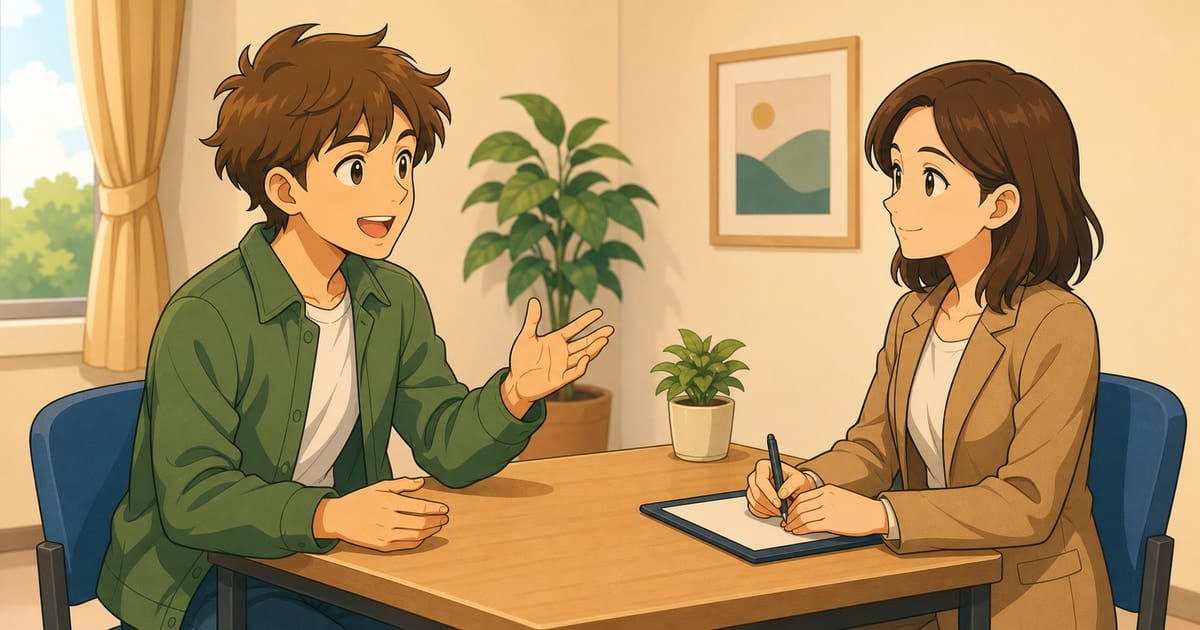
Describing a picture (opis zdjęcia) is usually the first task in the speaking part of the Polish B1 exam. You are given one illustration and you talk about it — with no written preparation, for roughly two to three minutes. The task looks easy, which is exactly why it catches people out: most candidates name three things they can see, fall silent after twenty seconds, and lose marks not for mistakes but for saying too little.
The good news is that this is the most predictable task on the whole exam. It has a fixed structure you can prepare once and apply to any picture.
The whole speaking part lasts about 15 minutes and is worth 40 points, with a 50% pass threshold — as in every module separately. The wider picture: speaking in the B1 exam.
What your description has to contain
The examiner is not checking whether you guessed what is "really" happening in the photo. They are assessing whether you can speak coherently and develop a topic. A good description answers four questions and then goes one step further:
| Element | What you answer | Why it matters |
|---|---|---|
| Who / what | Who and what do you see in the foreground? | the basics — without it there is no description |
| What they are doing | What is the action, what is happening? | this is where verbs and tenses come in |
| Where | Place, background, time of day, season | shows your vocabulary range |
| Mood | What emotions, what atmosphere? | lets you use adjectives |
| Interpretation | Why do you think so? What happened before / will happen next? | this raises your mark |
That last row is what separates a 20-point answer from a 35-point one. A sentence like "Wydaje mi się, że to rodzinne spotkanie, ponieważ wszyscy siedzą przy jednym stole" ("I think it's a family gathering, because they're all sitting at one table") shows more than five correct but simple sentences.
Step by step
- Start general, in one sentence. "Na zdjęciu widzę…" ("In the photo I can see…") — don't open with a detail in the corner of the frame.
- Foreground. Who matters most, what they look like, what they are doing.
- Background and place. Where this is happening, what is further back, the time of day or year.
- Mood and emotions. Whether people look happy, tired, focused.
- Interpretation and guesswork. What probably happened before, or will happen next.
- Finish by relating it to yourself. One or two sentences: whether you like such situations, whether something similar happened to you.
Step 6 is the easiest way to extend your answer when you have run out of details — and it sounds natural, because examiners often ask about it anyway.
Useful phrases
Opening: Na zdjęciu widzę… (In the photo I see…) · Na pierwszym planie jest/są… (In the foreground there is/are…) · W tle widać… (In the background you can see…) · Po lewej / po prawej stronie… (On the left / right…) · Na środku… (In the middle…)
When you are not sure: Wydaje mi się, że… (It seems to me that…) · Prawdopodobnie… (Probably…) · Chyba… (I think…) · Wygląda na to, że… (It looks like…) · Możliwe, że… (It's possible that…)
Mood: Atmosfera jest spokojna / radosna / napięta. (The atmosphere is calm / joyful / tense.) · Ci ludzie wyglądają na zadowolonych. (These people look pleased.)
Guessing: Może właśnie wrócili z… (Maybe they've just come back from…) · Pewnie za chwilę… (They'll probably shortly…) · Sądzę, że przed chwilą… (I think a moment ago…)
Relating to yourself: Ja też lubię… (I like … too) · U mnie w domu jest podobnie. (It's similar at my home.) · Ta sytuacja przypomina mi… (This situation reminds me of…)
Note that "Wydaje mi się, że" and "Myślę, że" always take że with a comma before it — one of the most frequently corrected errors in this part of the exam.
A full worked example
Photo: several people sitting at a table in a garden, food on the table, a sunny day.
Na zdjęciu widzę grupę ludzi, którzy siedzą przy dużym stole w ogrodzie. Na pierwszym planie jest starsza kobieta w jasnej bluzce — nakłada coś na talerz i rozmawia z mężczyzną obok. Na stole stoi dużo jedzenia: sałatki, chleb, owoce i dzbanek z jakimś napojem.
W tle widać drzewa i niski drewniany płot, więc to prawdopodobnie ogród przy domu, a nie park. Jest słonecznie, ludzie są ubrani lekko, więc myślę, że to lato albo koniec wiosny — może późne popołudnie, bo cienie są długie.
Atmosfera wygląda na bardzo spokojną i radosną. Wszyscy się uśmiechają, nikt nie patrzy w telefon, wydaje mi się, że dobrze się znają. Możliwe, że to spotkanie rodzinne albo urodziny, ponieważ na stole jest naprawdę dużo jedzenia — więcej niż na zwykły obiad.
Sądzę, że przed chwilą wszyscy razem przygotowywali ten posiłek, a za chwilę będą jeść i długo rozmawiać. Ja też bardzo lubię takie spotkania. U mnie w domu jedzenie w ogrodzie latem jest normalne i zawsze trwa kilka godzin.
That is about 200 words, and roughly how much you should say. Notice there is no difficult vocabulary in it — what it has instead is structure, a few hedging phrases, and one personal reference.
Common mistakes
- Saying too little. Three sentences and silence is the most common reason for a low mark. If you run out of ideas, go back to the mood, or to yourself.
- Listing instead of describing. "Stół. Krzesła. Ludzie. Drzewo." is a list, not a description. Join your sentences: bo, więc, dlatego, ponieważ, ale.
- Stating instead of hedging. You don't know it's a family — say "wydaje mi się, że", not "to jest rodzina". Cautious forms earn marks.
- Describing only the middle of the photo. The background is free vocabulary: season, weather, place.
- Going silent while hunting for a word. Better to say "nie wiem, jak to się nazywa po polsku, ale to jest coś do…" — communicating despite a missing word scores higher than a pause.
- Memorising a description. A learned text is audible and won't fit the picture you actually get.
How to practise
You cannot learn this by reading — you have to speak out loud. In the picture description module you get exam-format illustrations: you record your answer and AI feedback assesses it against B1 criteria, showing what to fix — length, structure, grammar. The next step is the monologue, the second speaking task.
It is also worth seeing the speaking part as a whole: speaking in the B1 exam and what the B1 exam looks like. To practise straight away in exam format, go to the sample B1 tests.
In short: describe using the who–what–where–mood structure, add an interpretation ("wydaje mi się, że… ponieważ…"), finish by relating it to yourself, and speak for about two minutes. Structure matters more than difficult words.